Solo Travel Tours vs. Going Truly Solo: An Honest Comparison
Solo travel tours hand you safety, logistics and instant company, and in return quietly take your freedom, a significant chunk of your money, and your say over who you spend the trip with. Going truly solo costs you the convenience and asks more of you up front, but you keep all three. The honest answer: book the tour when a region's genuinely hard, and go solo everywhere else. Here's how I learned the difference.
I've done both. I've booked the group tour and I've gone truly solo, and I'll tell you the four things a tour quietly takes from you the moment you book it.
Full disclosure up front, because the brand voice here is honesty: I'm building the alternative, a solo-travel community app called Just Gutsy. But I'm not selling you a seat on a tour, and that's exactly why I can be straight about what tours cost you. I have done both, repeatedly, and I keep choosing the same way for the same reasons.
The Four Things a Solo Travel Tour Quietly Takes From You
Here's my reason, stated plainly, and it's the spine of everything below: I choose solo over a group because going solo I don't compromise on freedom, it's cheaper, and I get to choose my people. Is there better than that?
A tour trades those three away for one real thing in return, it takes the logistics and the safety off your plate. Sometimes that trade is worth it. Most of the time, for most trips, it isn't. The four things you hand over:
- Freedom, the group's schedule becomes your schedule.
- Money, substantially more, in my experience, for the convenience, sometimes a little, sometimes many times over.
- Your people, you're locked in with whoever else booked, like them or not.
- The wander, the unplanned detours that so often become the best part of a trip.
A tour buys you logistics and safety. You pay for it in freedom, money, and the people you'd otherwise have chosen yourself.
When a Tour Is the Right Call: Nairobi to Cape Town, March 2024
I want to be fair to tours, because there's a real case for them, and I lived it. In March and April 2024 I travelled overland from Nairobi to Cape Town, and for that trip I deliberately booked a group adventure tour with G Adventures rather than going solo.
The decision wasn't about wanting company. It was about safety, logistics, and sheer uncertainty. I had no clear read on the culture around solo female travel across that route. Too many questions, too many borders, too many unknowns, and the things most worth doing were remote: the East Africa safaris, the crossings, the places you can't easily reach by booking a bus the morning of. For someone who isn't keen on renting a car and roaming, that route alone is genuinely hard to stitch together.
So the group solved a real problem. That's the honest case for guided solo travel: a region where the logistics are punishing, the safety picture is unclear, and the highlights are remote. In that exact situation, I'd book the group again.
Book the tour when the region is genuinely hard, remote highlights, punishing logistics, real safety unknowns. That's when the trade is worth it.
The Catch Nobody Warns You About: You Don't Get to Choose Your People
Here's the part the brochures skip. My single biggest dread in travel is getting stuck with people I don't get along with, because that one thing can taint the whole experience. A trip that should be the most amazing time of your life becomes something you just want to be over.
Even on that Africa tour, which was the right call overall, it happened in miniature. There was tension with one person, and the mismatch was enough that I pulled back into my own corner for stretches of it. Nobody's fault exactly, I just wasn't aligned with the overall vibe, and on a group tour there's no exit. You're with whoever booked the same dates.
It's a pattern, not a one-off. In summer 2025 I did a tennis week in the Alps. The people were perfectly nice, a couple were a bit odd, but they simply weren't my people. Not the best time of my life, and not a single one I'm still in touch with. Compare that to what happens when I travel alone and find my people, which is the next story, and the difference is night and day.
On a tour you don't pick the group, and you can't leave it. One mismatch and the trip you'd dreamed about becomes one you're waiting to end.
The $70 Trek vs. the $600 One: What You Pay to Be Guided
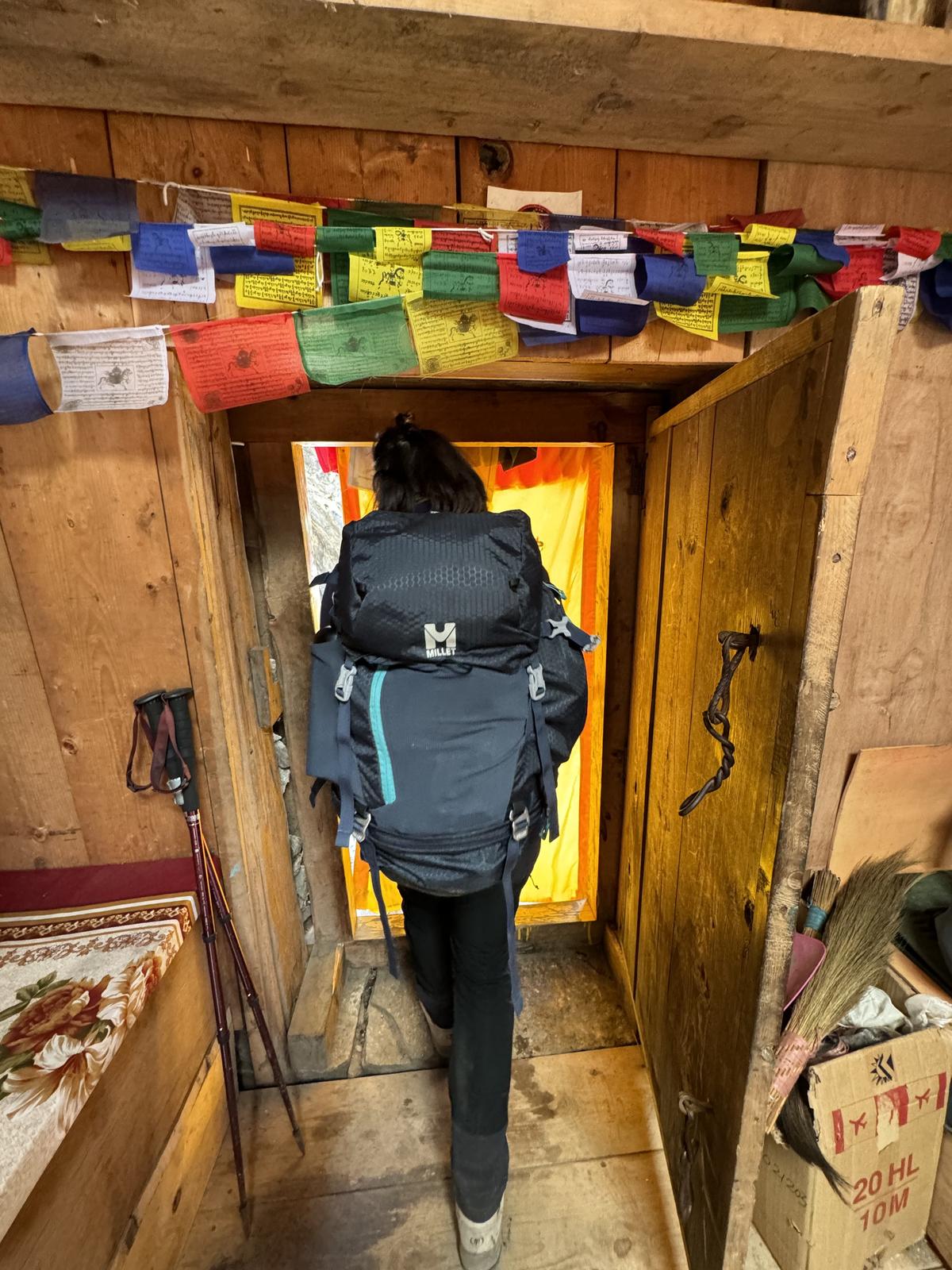
Now the money, with a real number. In October 2024 I trekked to Mardi Himal Base Camp out of Pokhara, Nepal, independently, no guide, no package. Permits, transport, teahouse beds, food, the lot: roughly $70 all in for three days.
On the trail I got talking to another trekker doing the same route with a guide. By his account he was paying around $600. The guided version stretched the same distance over four or five days instead of my pace, but as far as I could tell, he wasn't getting much more than I was. Same mountains, same teahouses, same trail. Roughly nine times the price for company I was finding for free anyway.
That gap isn't unique to Nepal. On cheap routes, much of Southeast Asia included, a package can cost you wildly more than you need to spend, when the independent version already gives you everything: a bed, a meal, a permit, a path. Sometimes the difference is small. Sometimes it's the price of an entire second trip.
On budget-friendly routes, going solo isn't just cheaper, it can cost a fraction of the guided price for a near-identical trip.
“Solo” Doesn't Mean Alone: The Spanish Trekkers I Still Talk To
The objection I hear most is that going solo means going lonely. The Mardi Himal trek is the cleanest rebuttal I have.
First evening at the teahouse, I met two Spanish guys, also trekking independently. Teahouses are so communal that conversation is almost automatic, you're sharing food and a hot drink with whoever's on the trail that night. The second night the three of us shared a room, which got me a cleaner bed for less money. We carried on together up the trail, met again back in Pokhara, then again in Kathmandu, and we're still in touch to this day.
That's the thing a tour can't promise and going solo quietly delivers: I didn't just save money, I chose my people. They weren't assigned to me by a booking system. We found each other, clicked, and stuck together because we wanted to. If you've ever worried solo travel is lonely, that fear is worth unpacking on its own, but the short version is that being alone and being lonely are not the same thing, and openness on the road does most of the work for you.
Going solo doesn't assign you a group, it lets you find your people, and those are the ones who stick.
Where Tours Make Sense, and Where Going Solo Usually Wins
The right answer depends less on you than on where you're going. After doing both across several continents, the split is fairly consistent. Some places genuinely reward a group tour or an organized solo travel package; most reward going independent.
Where tours make sense:
- East Africa safaris, remote parks, internal logistics and safety that a group genuinely smooths, as I found Nairobi to Cape Town.
- Antarctica, there is essentially no independent option; you go by expedition or you don't go.
- Patagonia expeditions, vast distances and weather windows where organized logistics earn their cost.
- Kilimanjaro, a guided climb by regulation and good sense; I summited it guided, and would again.
- Mera Peak, a Himalayan peak I climbed guided with a friend; the altitude and technical load make a guide non-negotiable.
Where going solo usually wins:
- Thailand, cheap, well-trodden, packed with other solo travellers; a package mostly adds cost.
- Vietnam, easy overland transport and a strong backpacker trail make group tours for solo travelers largely unnecessary.
- Japan, safe, efficient and astonishingly easy to navigate alone, even without the language.
- Portugal, compact, friendly and walkable; one of the gentlest places to go independent in Europe.
- Spain, great transport, social hostels and a culture of eating out late that makes meeting people simple.
Tours earn their cost where access, altitude or safety genuinely demand them. Almost everywhere cheap, safe and well-connected, going solo wins.
A Tour Is Probably Better If…
I've spent most of this arguing for going solo, so let me be straight about who should do the opposite. A guided trip or a solo travel tour is very likely the better choice for you if any of these are true:
- It's your first international trip. There's no shame in easing in with the logistics handled.
- You're anxious about being alone. A built-in group removes the part you're dreading while you build confidence.
- You're travelling in a genuinely difficult region. Where safety or logistics are hard, the group is real protection.
- You only have one week. With little time, a tour's efficiency can be worth more than the freedom you trade.
- You value convenience over flexibility. If not planning is the holiday, pay for it gladly, that's exactly what the best solo travel companies sell.
If two or more of those describe you, book the tour and don't look back. The goal is the trip you'll actually enjoy, not a point of pride about doing it alone.
Solo isn't a moral high ground. If it's your first trip, your time is short, or the nerves are real, a tour is the smarter call, and you can go solo next time.
Solo Travel Tours vs. Solo Travel: The Honest Comparison
Everything above, side by side. This is the trade in one view, what each option costs you and what it gives back.
How to Decide: A Simple Rule for Your Next Trip
After doing both across several continents, my rule is short: go solo by default, and book a group only when a specific condition forces your hand. Here's the decision in practice.
Go solo when:
- The region is well-trodden by solo travellers and the logistics are manageable.
- It's a budget-friendly route where solo travel packages cost far more than going direct.
- Freedom matters to you, your pace, your route, your changes of plan.
- You want to choose your own people rather than be assigned them.
Consider a tour, group or package when:
- The highlights are genuinely remote and hard to reach independently.
- Borders, transport or bookings are complex enough to eat your whole trip.
- The safety picture or the local culture around solo travel is unclear to you.
- You'd rather pay a premium to have it all handled, and you've checked what reputable solo travel companies actually include.
Default to solo. Pay for a tour only when a region is remote, logistically punishing, or genuinely uncertain on safety, not just because booking one feels easier.
The Third Option: Your People, Without the Package
So here's where I landed, after years of choosing between the two.
A tour chooses your people for you, and you might not like them. That was the tension on the Africa trip and the dead-end of the Alps week: a group assigned by a booking system, no exit when the vibe is wrong.
But going truly solo doesn't guarantee the opposite either. You get to choose your people, when you find them. On a quiet stretch, in a town with no hostel, in the off-season, you might not find them in time, or at all.
That gap, choose-your-people freedom, without the gamble of whether they'll show up, is the exact problem I kept running into, trip after trip. Neither option solved it. So I started building Just Gutsy.
It's the third option: the freedom and the cost of going truly solo, with your people already on the same road, other solo travellers near you, doing the same thing, ready to meet in real life. You keep everything solo gives you, and close the one gap it leaves open.
That's the whole idea, solo, together. Download Just Gutsy, free on iOS and Android →
Frequently asked questions
Should I join a solo travel tour?▾
Join a solo travel tour when safety concerns, hard logistics, or remote destinations make independent travel genuinely difficult, think East Africa safaris, Antarctica, or a Himalayan peak. For easy, well-trodden destinations like Thailand, Vietnam, Japan, Portugal or Spain, going solo is usually cheaper and gives you far more freedom.
Are solo travel tours worth it?▾
Solo travel tours are worth it when they solve a real problem you can't easily solve alone, such as crossing a remote or unfamiliar region safely. They're rarely worth the premium on a budget-friendly route where you'd meet people anyway, I paid about $70 for an independent trek in Nepal that a guided trekker beside me was paying roughly $600 for.
Is it better to travel solo or with a group?▾
For most trips, going solo wins on freedom, cost and the variety of people you meet. A group is the better choice in genuinely hard regions, remote highlights, complex logistics, or an unclear safety picture, and for first-time travellers, very short trips, or anyone anxious about being alone. Match the choice to the route and to where you are in your travel confidence, not to your nerves alone.
Solo travel vs group travel: which lets you meet more people?▾
Going solo, counterintuitively. A group tour gives you the same faces all trip; solo travel puts you next to locals, other independent travellers and people you'd never have planned to meet, like the two trekkers I met in Nepal and still talk to years later. Group tours for solo travelers cap your social circle; going solo doesn't.
Is solo travel safe for women compared with a tour?▾
In well-trodden destinations, solo travel is very manageable with normal precautions. A group genuinely helps where logistics are hard or the local culture around solo female travel is unclear, which is exactly why I booked an organized tour for an overland trip across Africa, and went solo almost everywhere else.
Written by Syrine, founder of Just Gutsy. Eight years of solo travel across six continents.