Backpack vs Suitcase for Solo Travel: Which Is Better?
For 80–90% of solo trips, the ones with multiple cities, hostels, public transport, stairs or a lot of walking, a backpack beats a suitcase, not because of identity but because of movement. A suitcase still wins when you stay in one place. Here's how to tell which trip is which, and what to look for in a backpack you'll actually live out of.
Quick answer: Choose a backpack if your trip involves multiple cities, hostels, buses, trains, or uneven streets. Choose a suitcase if you're staying in one hotel or resort, packing a suit, or carrying winter or sports gear.
When I Actually Reach for a Suitcase
I'm not anti-suitcase. There are trips where I pack one without hesitation, and pretending otherwise would be dishonest. A suitcase is the right tool any time you arrive in one place, stay there, and don't drag the bag across uneven ground.
The cases where I personally choose a suitcase:
- Business trips, when there's a suit or anything that can't be crushed into a backpack.
- Weddings, formalwear, shoes, the bits you don't want creased on arrival.
- Winter-sports trips, bulky gear and cold-weather layers that eat volume fast.
- A single-base stay, one resort, one hotel, smooth pavements, a porter at the door.
For everything else, which is most of solo travel, a backpack wins. Here's the case.
A suitcase wins when you stay put and pack formal or bulky kit. For the moving, mixed-terrain trips that define solo travel, the backpack wins.
Backpack vs Suitcase: When Each Wins
| Trip type | Suitcase | Backpack |
|---|---|---|
| Resort week, one location | ✓ | |
| Business trip with a suit | ✓ | |
| Smooth-pavement city break, hotel with porter | ✓ | |
| Multi-city, hostels, public transport | ✓ | |
| Cobblestones, stairs, no lifts | ✓ | |
| Trip that includes any hiking | ✓ | |
| Long solo trip, anywhere | ✓ | |
| Late connections, missed transfers, life happening | ✓ |
Cobblestones, Stairs, and Public Transport: Where Suitcases Fail
Anyone who has rolled a suitcase across an old town square, up the wrong side of a metro entrance with no lift, up and down never-ending staircases, knows the moment a suitcase stops being a convenience. You suck it up for a bit. After that, you start wondering whether to abandon the suitcase altogether and whether the clothes on your back aren't honestly enough.
Travelling alone, there's no one to mind the bag while you ask for directions, no one to take the heavy end up the stairs, no one to absorb the thing you overpacked or the thing you just bought.
Wheels are great until they aren't, and they aren't, for most of solo travel.
A Backpack Forces You to Pack Like a Decision-Taker
Solo travel is a thousand small calls a day. Where do I sleep tonight. Where do I eat. How do I get to the bus terminal, and where is it. Is this person trustworthy. Is it safe to walk back at this hour. Every one is a small tax on your attention.
A backpack caps your space and weight, so it makes the packing decision for you. No mindlessly throwing in that cute top, oh and that dress of course, never enough, you know your weakness. It flips the default upside down: from 70% of your bag unused to at least 70% used. I'll admit I've yet to unlock the zero-waste packing mastermind.
On the road, pack like Steve Jobs: same outfit every day. Four t-shirts, two dirty, easy choice. That's one less thing to spend yourself on, and more left over for the calls that matter.
Pack so you stop having to decide. Save the brainpower for the trip.
One Bag for the City, the Hike, and Everything Between
Here's what nobody warns you about a suitcase: you immediately need a second bag. A daypack for excursions. A smaller one for the weekend within the trip. Something for the hike to the lookout, something for the airport security tray. By the time you've packed for a real trip you're carrying a suitcase, a tote, a daypack, a crossbody…
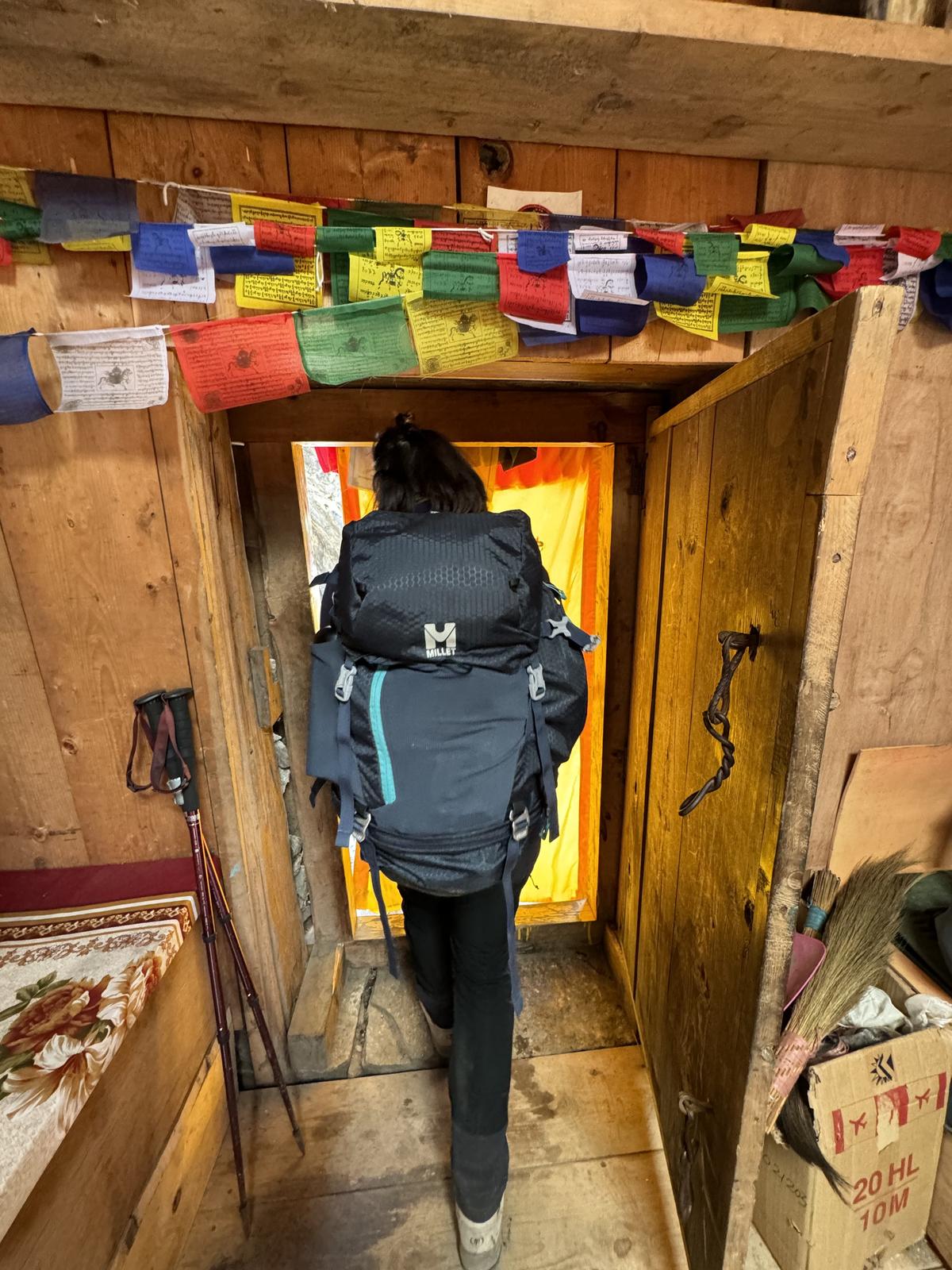
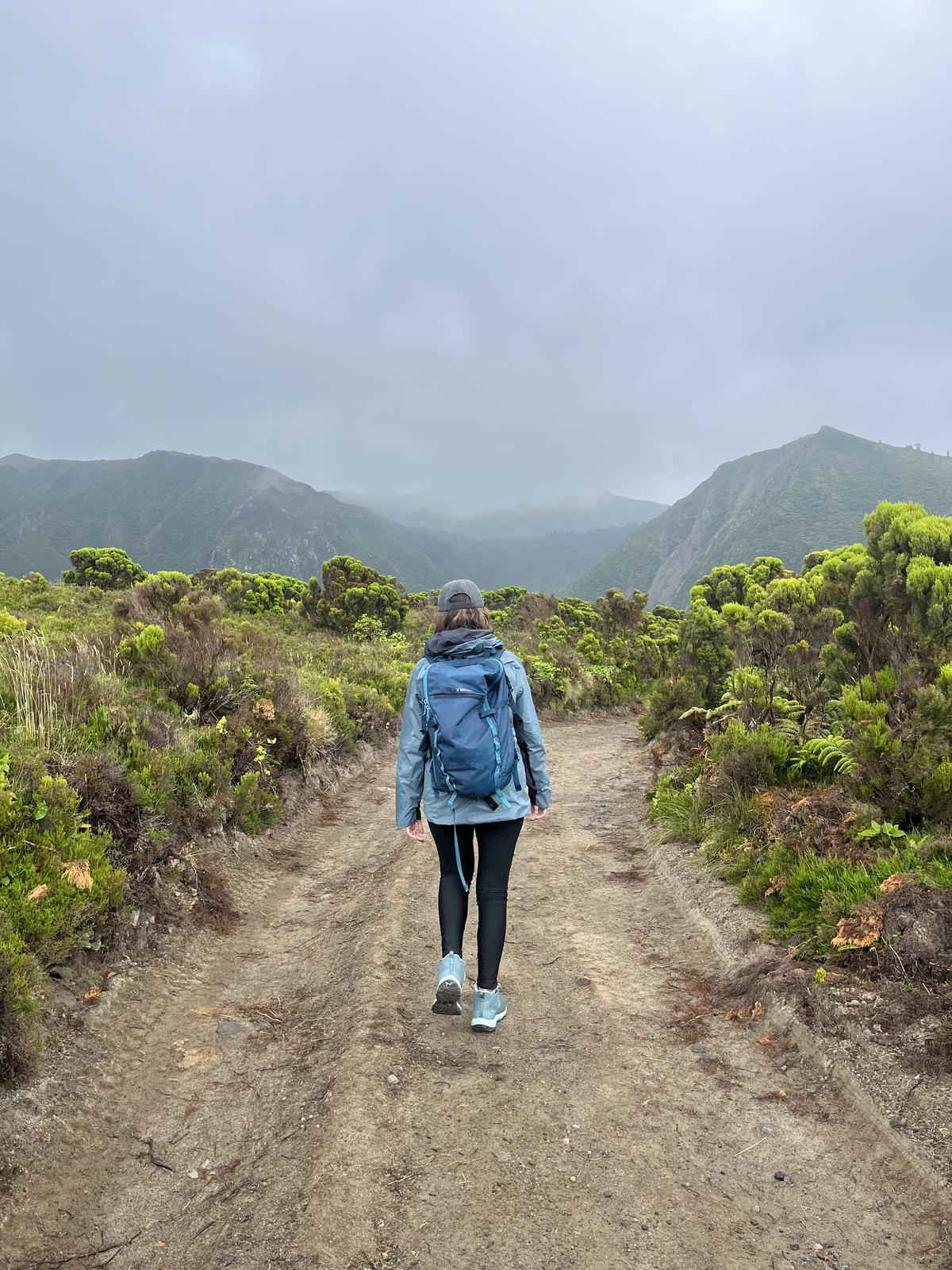
A travel backpack collapses all of that into a single piece. You arrive with it, leave your laundry at the hostel, and head out on a three-day trek with the same bag, half empty. City and mountain, same gear. The rain cover (best travel investment I've made, another conversation) doubles as a stash bag for what you leave behind on a short side-trip.
If your trip has any physical leg, a trek, a day hike, a long bus ride where you want everything close, because you never know, the backpack carries that too. You stop needing a special bag for the part of the trip that isn't the city.
Arrive with one bag, leave with one bag. No luggage system required.
When Things Go Sideways: How a Backpack Saved Christmas Day in Chile
Christmas Day, 2022. I land in Santiago after two flights, destroyed, with one final connection still ahead to Coyhaique. The flight from Europe came in late. The connection was already boarding by the time I cleared immigration, and I still had to pull my backpack off the belt.
By the time I had it, check-in for the connection was officially closed. I negotiated at the desk, shed a tear or two, nothing. As a last resort I ran for the gate, backpack on. I had to say goodbye to my multi-purpose knife, but the bag itself went through; it was cabin-sized. I made the flight without buying a new ticket, and saved my budget.
When the day falls apart, a backpack moves with you. A suitcase doesn't.
Afraid of What It Signals? It Actually Opens Conversations
Worried a backpack screams tourist? A suitcase does that too, it just says tourist who can't run.
But a backpack signals something else: solo traveller, in the good way. Solo travellers find each other. The local at the bus station who's curious where you're from. The woman at the next café table heading your direction who clocks the same gear on the floor. Your bag does some of the introducing for you, which matters when you've already spent most of your energy and your opening lines on getting where you are.
Your bag is doing the introducing. Make it a backpack.
What to Look for in a Solo Travel Backpack
Two things matter most: that it's multipurpose, and that it's easy to live out of.
It should open flat, like a suitcase. The single biggest difference between a bag you happily live out of for three weeks and one you fight every morning is whether you can lay it down, unzip it across the middle, and see everything at once.
Pockets where you reach for things. The hip belt should carry the load, that's its job; most of the weight sits on your hips, not your shoulders, with pockets for what you grab constantly: phone, lip balm, the snack for later. Bigger side pockets for a water bottle or anything you want quick access to.
Size: keep it minimal. 40 litres for most trips, 50L at the very top. I've been a 50L person and it served me well, at 1.61m. The smaller size works for you, not against you, trust me, you'll be grateful. If you plan to always fly it as cabin baggage, check airline dimensions before you buy.
Best Backpack Sizes for Solo Travel
| Trip length / conditions | Recommended size |
|---|---|
| Weekend / short city break | 25–35L |
| 1–3 weeks, warm weather | 40L |
| 3+ weeks, or cold weather | 50L |
| Carry-on only (most airlines) | Up to 40L |
Should you invest? I've travelled for years on a backpack I bought for a sand-yachting summer camp at fourteen. It does the job perfectly, but only because it happens to match every feature above. Yes, I tried other options. Not a great fit.
What to Pack for Solo Travel: A Backpacker's Checklist
The solo travel must-haves, after a lot of trips and a lot of overpacking:
- Four t-shirts (you'll wash on the road, trust me)
- Two pairs of trousers / one dress
- Underwear and socks for a week
- One jumper, one light jacket
- One pair of walking shoes, sandals if it's hot
- Toiletries, decanted, under 100 ml
- Phone charger, plug adapter, power bank
- Passport, cards, cash, scanned copies in your email
- Reusable water bottle (the side-pocket one)
- Small first aid kit + the meds you actually need
- The rain cover that doubles as a day bag
- One snack you bought at the airport and will later regret
That's it. Anything beyond this list, ask one question: have I used it on the last three trips? If no, it doesn't come.
About the Author
Syrine Jouini has spent eight years travelling solo across six continents and more than 20 countries. Her solo journeys include over a month on the Pacific Crest Trail and summiting Mount Fuji and Mount Whitney alone, alongside guided climbs of Kilimanjaro and Mera Peak. She is the founder of Just Gutsy.
Frequently asked questions
Is a backpack or suitcase better for solo travel?▾
For most solo trips, multiple cities, hostels, public transport, stairs, or a lot of walking, a backpack is better, because it moves with you. A suitcase is better for single-base trips, formalwear, or bulky winter and sports gear.
Do I need a backpack for solo travel?▾
Not strictly. If your trip involves smooth pavements, one hotel, and a porter, a suitcase works. If it involves cobblestones, stairs, multiple cities, hostels, or buses, a backpack will quietly save you during transition moments.
What size backpack is best for solo female travel?▾
40 litres is the sweet spot for most trips, including most three-week ones if you're not packing for winter. It's also the upper limit for most carry-on allowances. Go to 50L for cold weather or trips over three weeks.
Can I take a 40L travel backpack as carry-on?▾
Most airlines, yes, but check current carry-on dimensions, especially for European budget airlines. Ryanair and easyJet are stricter than they used to be, and the rules keep changing.
How much weight is too much for a solo travel backpack?▾
Roughly 10% of your body weight is the standard rule. The honest version: if you can walk 20 minutes with it on without resenting your life, you're fine. If you can't, you've packed too much.
Written by Syrine, founder of Just Gutsy. Eight years of solo travel across six continents.